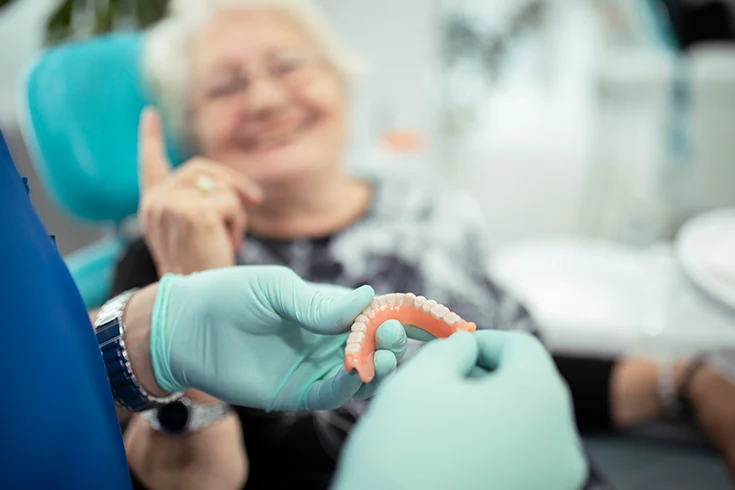
If you wear dentures, you know the importance of having a stable, comfortable fit that allows you to eat, speak, and smile without worry. Even well-crafted dentures can sometimes shift, especially over the course of a day. That’s where denture adhesive can help, providing an extra layer of stability and confidence.
In this article, we’ll share expert insights on how denture adhesive works, its benefits, and when it’s appropriate, so you can make an informed choice.
What Is Denture Adhesive?
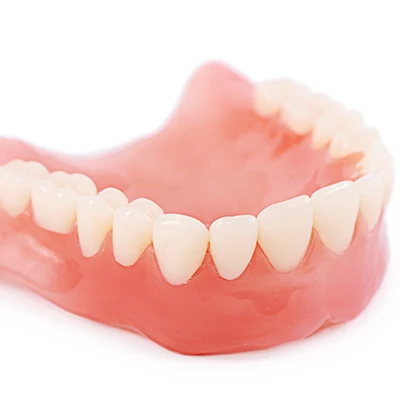
Denture Adhesive is a product designed to improve the grip between your dentures and gums. It’s available in several forms, creams, powders, and pre-cut adhesive strips. When applied, it forms a thin, sticky layer that helps your dentures stay in place.
According to the American Dental Association (ADA), denture adhesive can be beneficial for patients with well-fitting dentures who want extra confidence in daily activities. However, it should never replace professional adjustments for ill-fitting dentures.
How Does Denture Adhesive Work?
The science behind denture adhesive is straightforward but effective. When applied to a clean, dry denture, the adhesive interacts with your saliva to create a secure seal. This seal:
- Reduces movement of the denture
- Improves bite stability
- Helps prevent food particles from lodging underneath
Think of denture adhesive as a supportive aid, not a permanent solution. If your dentures are loose due to changes in your gums or jawbone, your dentist can reline or replace them for a proper fit.
Benefits of Using Denture Adhesive
- speaking, and smiling.
- Increased Comfort: Prevents gum irritation by reducing unnecessary movement, promoting a more comfortable denture-wearing experience.
- Confidence in Social Situations: Keeps dentures firmly in place, allowing you to speak, laugh, and eat confidently.
- Better Seal Against Food: Forms a strong barrier to prevent food particles from getting trapped under the dentures.
- Smoother Transition for New Denture Wearers: Eases the adjustment to new dentures by providing additional security and comfort during daily activities.
Types of Denture Adhesive
Choosing the right denture adhesive depends on factors like comfort, ease of use, and personal preference.
Denture Creams or Pastes
Denture Creams or Pastes are the most popular option for those seeking a strong, all-day hold. They are applied by placing small dots or strips on the surface of the denture. This type of adhesive is ideal for keeping dentures securely in place throughout the day, but it’s important not to overuse it, as excess adhesive can ooze out, causing discomfort. We recommend using just enough for a firm fit without applying too much pressure.
Denture Powders
Denture Powders are an excellent choice for those who prefer a mess-free application and easy cleanup. They are applied by lightly sprinkling the powder onto the moist surface of the denture, allowing it to bond securely once it comes into contact with saliva. These adhesives work well for short-term use or if you need a light hold for your dentures. They tend to be easier to remove than pastes, but some users find that they provide a less secure grip.
Adhesive Strips or Pads
Adhesive Strips or Pads offer the convenience of pre-cut, mess-free application, making them ideal for people who need a portable solution for their dentures. These strips are simply placed on the denture base and pressed into place. They’re great for those who need a quick and easy solution, especially for travel, though they may not offer the same long-lasting hold as creams or powders. For added convenience, many users prefer them for temporary or occasional use.
Do Denture Adhesives Really Work?
Yes, when used correctly, denture adhesive can make a noticeable difference. A 2009 study published in the Journal of Prosthetic Dentistry found that adhesives improved denture stability and patient satisfaction.
However, the effectiveness of denture adhesive can vary depending on several factors. These include the fit of the dentures, the type of adhesive used, and the amount applied. Using too much or too little adhesive can affect the hold, so it’s essential to find the right balance for your needs. Additionally, oral health conditions, such as gum recession or bone loss, can impact how well the adhesive works.
Expert note: Denture adhesive is most effective for dentures that already fit well. It won’t fix dentures that are too loose or damaged.
When to Use Denture Adhesive
Consider using denture adhesive if:
- Your dentures fit properly but you want extra security
- You’re attending social events or eating in public
- You have minor gum resorption but still a stable denture fit
- You’re in the adjustment phase of wearing new dentures
When Not to Use Denture Adhesive
Avoid relying on denture adhesive if:
- Your dentures are significantly loose or uncomfortable
- You have sores, swelling, or oral infections
- You need to reapply adhesive multiple times daily
- Your dentures are broken or warped
In such cases, schedule a dental evaluation for adjustments or a new denture.
How to Apply Denture Adhesive Correctly
- Clean and Dry Your Dentures: Use a soft denture brush and non-abrasive cleaner.
- Apply Denture Adhesive Sparingly: Follow product guidelines; a little goes a long way.
- Position Dentures in Mouth: Press firmly for a few seconds.
- Wait Before Eating: Allow 5–10 minutes for the adhesive to set.
Pro tip: Avoid using hot water to clean dentures with denture adhesive residue, it can warp the denture base.
Conclusion
Now you know exactly how denture stabilization improves chewing, speaking, and confidence, by restoring function, enhancing communication, and boosting self-esteem. This treatment is more than just a dental upgrade, it’s a way to regain control of your life.
If you’re ready to experience the benefits of denture stabilization and improve your quality of life, Macomb Dental Group in Sterling Heights, MI is here to help! Schedule a consultation and take the first step toward a more comfortable, confident smile.
Safety and Maintenance Tips
- Remove dentures and denture adhesive daily
- Store dentures in water overnight to keep them from drying out
- Use adhesives free from zinc if you’re concerned about excessive zinc intake
- Choose ADA Seal of Acceptance products for safety and quality
Alternatives to Denture Adhesive
If you’re relying heavily on denture adhesive, ask us about:
- Relining: Adds a layer of material to your existing dentures, improving the fit and comfort as your gums change shape over time.
- Implant-Supported Dentures: These dentures snap securely into dental implants placed in your jaw, providing a stable and permanent solution without the need for adhesive.
- New Dentures: Custom-made dentures designed to perfectly fit your unique mouth shape, accommodating changes in your jaw and offering a more secure, comfortable fit.
Final Thoughts
Denture adhesive can be a valuable tool for stabilizing your smile when used correctly and in the right situations. It’s not a substitute for well-fitted dentures, but it can boost comfort and confidence in daily life.
If you’re unsure whether denture adhesive is right for you, or if your dentures need professional adjustment, Macomb Dental Group is here to help. Schedule an appointment to learn more about denture adhesive and customized denture care.
FAQs
Yes, denture adhesive is generally safe for daily use as long as you follow the product’s instructions. It’s important to remove the adhesive and clean your dentures thoroughly at the end of each day to prevent build-up.
For optimal performance, denture adhesive should be applied once a day. Overuse of adhesive can lead to discomfort, difficulty cleaning your dentures, and may even affect the fit of your dentures over time.
While denture adhesive can provide extra stability, it is not a permanent solution for ill-fitting dentures. If your dentures are loose or causing discomfort, it’s best to consult with your dentist to have them adjusted or relined. Adhesive should only be used to complement the fit, not as a replacement for professional care.
In some cases, denture adhesive can cause gum irritation, especially if too much is used or if the adhesive is not removed regularly. It’s important to clean your dentures and gums daily to avoid any build-up that could lead to sores or discomfort. If you experience persistent irritation, it’s a good idea to consult your dentist.
If your dentures feel loose, denture adhesive can provide temporary relief by holding them in place, but it’s not a long-term fix. Loose dentures may need adjustments or relining from your dentist.
Using denture adhesive incorrectly, such as applying too much or using it on dentures that don’t fit properly, can cause discomfort, oral sores, or difficulty cleaning your dentures. It’s important to follow the manufacturer’s instructions carefully and visit your dentist regularly for adjustments. Incorrect use of adhesive can also lead to gum irritation or damage to the denture base.
Yes, denture adhesive can significantly improve your ability to eat and speak comfortably by preventing dentures from slipping or shifting. Many denture wearers find that using adhesive allows them to enjoy a wider variety of foods and participate in conversations with greater confidence.
To remove denture adhesive, simply rinse your dentures under warm water and gently scrub them with a denture brush. Avoid using hot water, as it can warp the dentures. You can also use denture cleaners that are specifically designed to break down adhesive residues.
Bibliography & Sources

At Macomb Dental Group in Sterling Heights, MI, we provide dental implants—an effective, natural-looking solution for replacing missing teeth. Unlike traditional dentures, dental implants are securely anchored into the jawbone, offering unmatched stability and a feel that closely mimics natural teeth. Implants help preserve jawbone structure, prevent bone loss, and enhance both the function and appearance of your smile. With proper care, dental implants are a long-lasting option that allows you to eat, speak, and smile with confidence. Contact us today to learn how dental implants can restore your smile and transform your quality of life!
We are Dental Implant Specialists in Sterling Heights, MI.
At Macomb Dental Group in Sterling Heights, MI, we provide dental implants as an effective, natural-looking solution for replacing missing teeth. Unlike traditional dentures, dental implants are securely anchored into the jawbone, offering unmatched stability and a feel that closely mimics natural teeth. Implants help preserve jawbone structure, prevent bone loss, and enhance both the function and appearance of your smile. With proper care, dental implants are a long-lasting option that allows you to eat, speak, and smile with confidence. Contact us today to learn how dental implants can restore your smile and transform your quality of life!